The Making of Martyrs: A Story of Love and Sacrifice in Siberian Exile
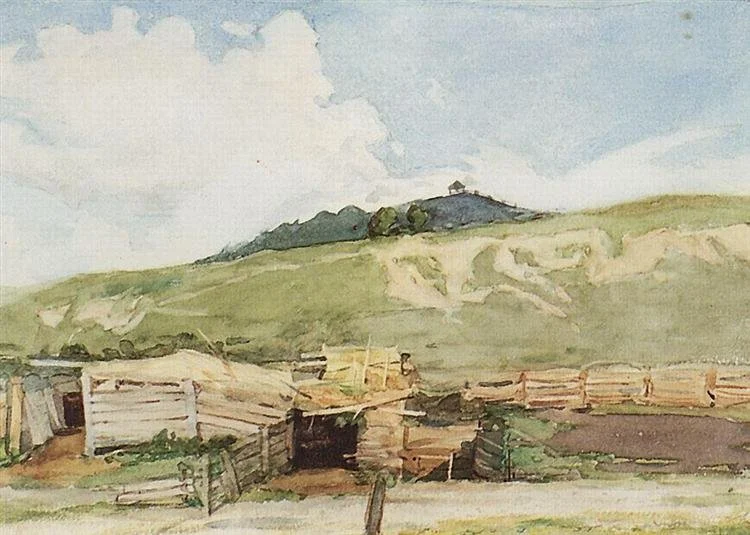
Siberian landscape. Torgoshyno, Vasily Surikov, 1873.
“Their epaulettes were torn from their shoulders and thrown, together with their military greatcoats, into the flames. Each officer was made to kneel, and an executioner took a sword, specially filed down at the middle of its blade, and broke it over his head. The prisoners were then dressed in the rough grey smock issued to convicts and pronounced ‘civilly dead.’”
On December 14th, 1825, a group of political dissidents gathered on Senate Square in St. Petersburg to prevent the new tsar, Nicholas I, from being sworn into office after the death of Alexander I. The Decembrists, as they became known, were convicted of attempting to overthrow Nicholas I in a violent, failed coup.
At 3 a.m. on July 13, 1826, the Decembrists were led into the courtyard of the Peter and Paul Fortress — a symbol of Russian autocracy — and declared “civilly dead.” They underwent a typical ceremony (described above), and afterwards were sentenced to what many deemed the worst fate imaginable: 20 years penal labor and permanent exile in Eastern Siberia.
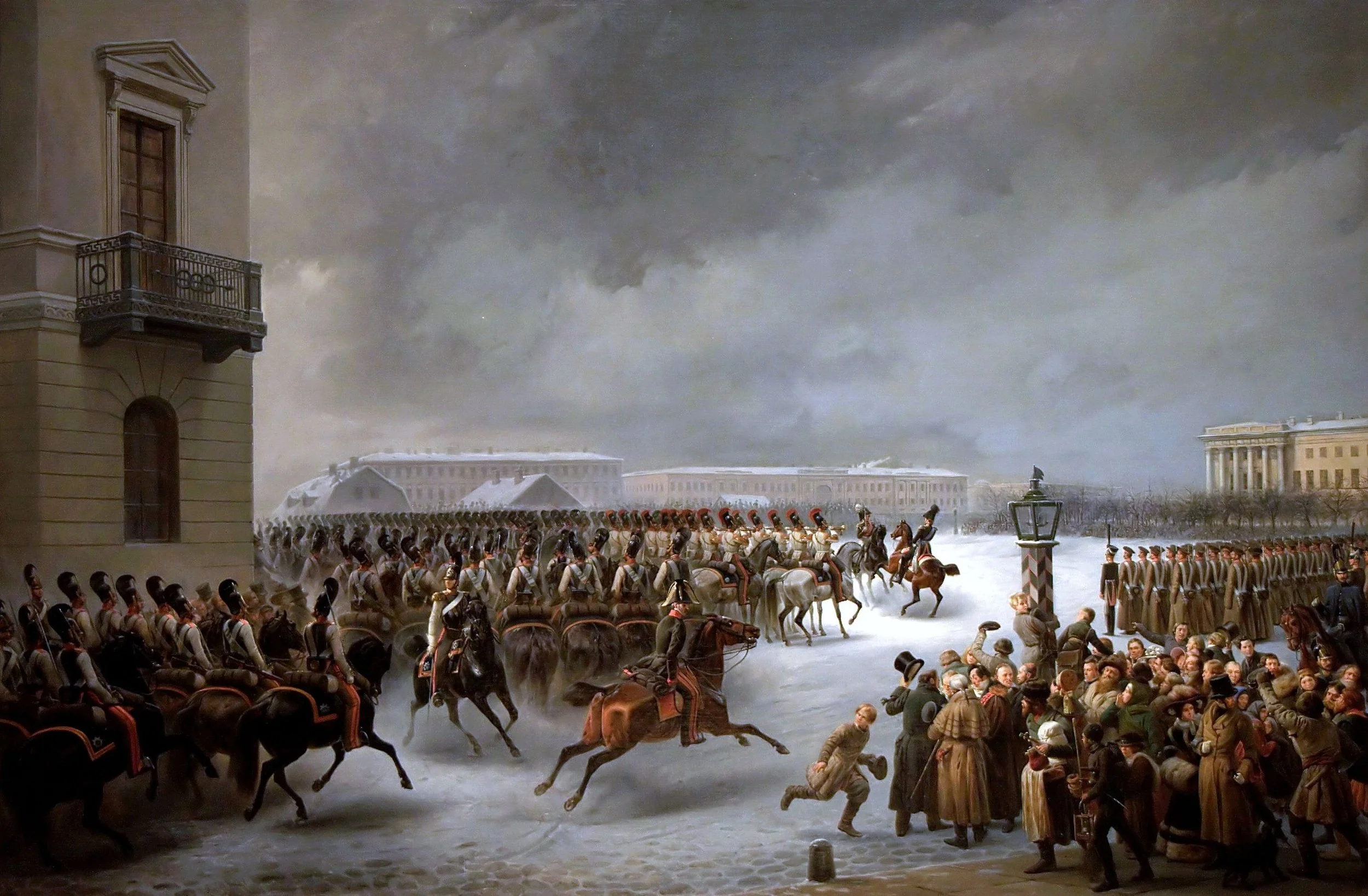
Decembrists at Peter's Square, Georg Wilhelm Timm, 1853.
The Realities of Siberian Exile
“I no longer considered myself an inhabitant of this world.”
Such was the feeling among the 121 Decembrists sent into exile.
In his profound study on Siberian Exile Under the Tsars, historian Daniel Beer explains that this sentencing was the equivalent of “absolute annihilation.” Many of the members of the Decembrists came from the most eminent families of St. Petersburg and Moscow. Such a fate would have been to enter another world.
Siberian exile was a typical form of punishment under the tsars. It was a swift way to remove criminals from Russian society while colonizing remote outposts of the empire. Years later, centuries of Siberian exile would serve as inspiration for the creation of the Soviet Gulag system.
At the time, Siberia had the same connotation as hell (in fact, many commentators made the apt comparison to Dante’s Inferno). One Russian explorer described,
“The very name Siberia is enough to terrify a Russian, who sees in it only inexorable separation from his homeland, a vast dungeon, inescapable and eternal.”
Exile to Siberia meant a plethora of trials: harsh penal labor in temperatures below -20 degrees Celsius, a dearth of food, clothing, housing, and medical care, humiliation rituals enacted both by guards and fellow prisoners, near extinction of all familial correspondence, and, perhaps most fatally, the destruction of the self.
Many family members of the Decembrists appealed to the Tsar for mercy. This was a long-held tradition in Russia — known as the “tsar-father” myth — in which the tsar acted as a “kind of Russian Christ”3 who hears the pleas of his people and grants clemency.
Nicholas, however, was in no forgiving mood; the pleas of the Decembrists’ families fell on deaf ears.
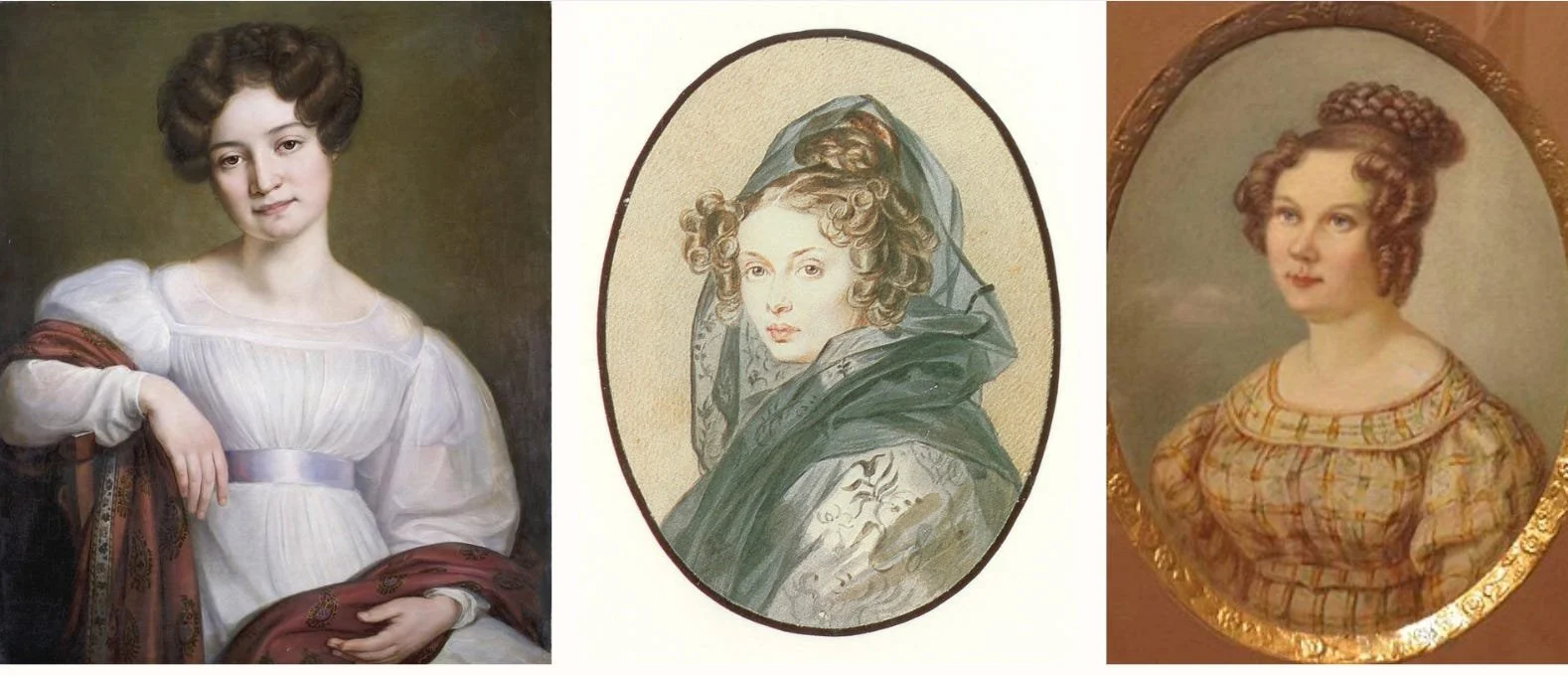
Maria Volkonskaya, Aleksandra Muravyova, Yekaterina Trubetskaya.
The Wives
It was under these conditions that a number of the wives of the Decembrists made the courageous and controversial decision to follow their husbands into exile.
The most famous were Maria Volkonskaya, Aleksandra Muravyova, and Yekaterina Trubetskaya. Inspired by the Byronic Romanticism of the 19th century, Maria declared in a letter to her husband, Sergei:
“I can assure you of one thing: whatever your fate, I will share it.”
Most of the wives had no idea that their husbands were involved in schemes against the state. However, as part of aristocratic families, their decision to follow their husbands was not easy to ignore.
The wives’ determination caused a number of problems for the state. Namely, Russian society was built in part on the belief in the sanctity of marriage. Thus, a denial of the wives’ right and duty to share their husbands’ fate would have been to deny the sanctity of marriage.
Moreover, it created an uncomfortable battle with the autocracy, drawing unwanted attention to the Decembrists and their cause. In an attempt to provoke the women into staying behind, the Tsar denied their right to take their children with them.
The wives were thus forced into a cruel choice between their husbands and their children. Many chose to leave their children safely behind with their families; some of the wives would hear of their death months later, miles away in Siberia.
The families of the women were distraught by their decision to leave. Maria’s mother wrote to Sergei:
“She will share the fate of a disgraced convict – she will die. Don’t be her assassin!”
Ultimately, despite the wrath of their families and the difficulties posed by the state, the women made the courageous decision to follow their husbands into exile in Siberia. Maria describes the moment she told her family. Her father was unable to look at her. She wrote,
“It’s over. I will never see him again, I have died for my family.”
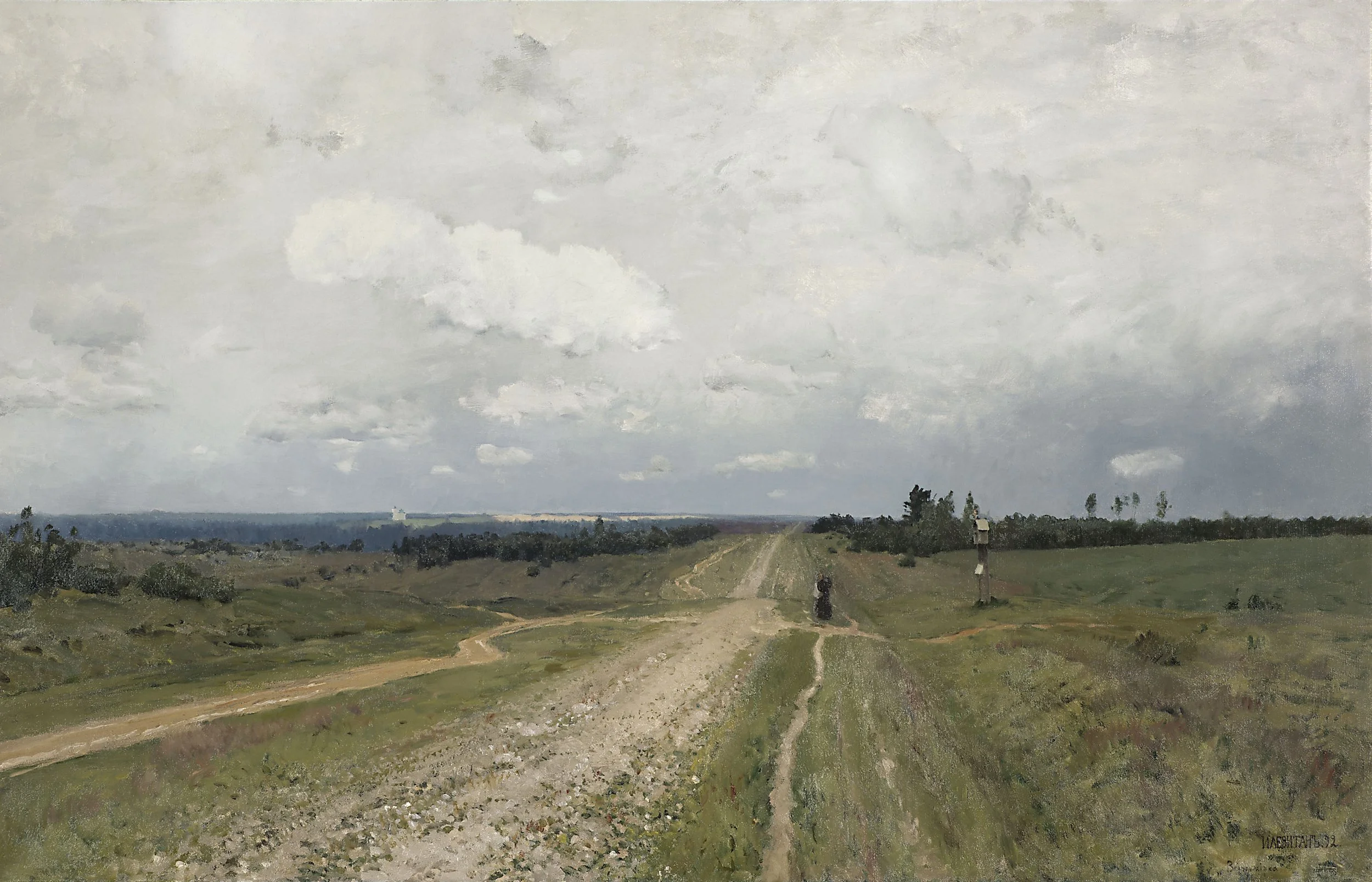
Vladimirka, Isaac Levitan, 1892.
The Journey into Exile
When it came time for the Decembrists to journey into exile, the Tsar commanded their transport be conducted with the utmost secrecy, in order to prevent any popular discontent. Chains were clapped around their hands and feet as they were ushered into carriages to take them from St. Petersburg to Irkutsk.
As the Decembrists reached the Ural Mountains, one can imagine their reactions as similar to many prisoners who reached the boundary post, marking the point between Europe and Asia. American traveler George Kennan wrote of the boundary post in 1888:
“No other spot between St. Petersburg and the Pacific is more full of painful suggestions, and none has for the traveller a more melancholy interest than the little opening in the forest where stands this grief-consecrated pillar.”
As the women prepared to follow their husbands into Siberia, they were issued a warning by Nicholas:
“I feel obliged once again to repeat here my warning, which I have already given you, about what awaits you, should you travel beyond Irkutsk.”
Essentially, the Tsar was denying the women the right to return to Russia once they had reached Siberia. Although they had not committed any crimes, the wives were destined to share the same fate as those punished by exile.
After all the obstacles thrown in their way, both by their families and the state, it is a miracle that the wives still decided to journey to Siberia.
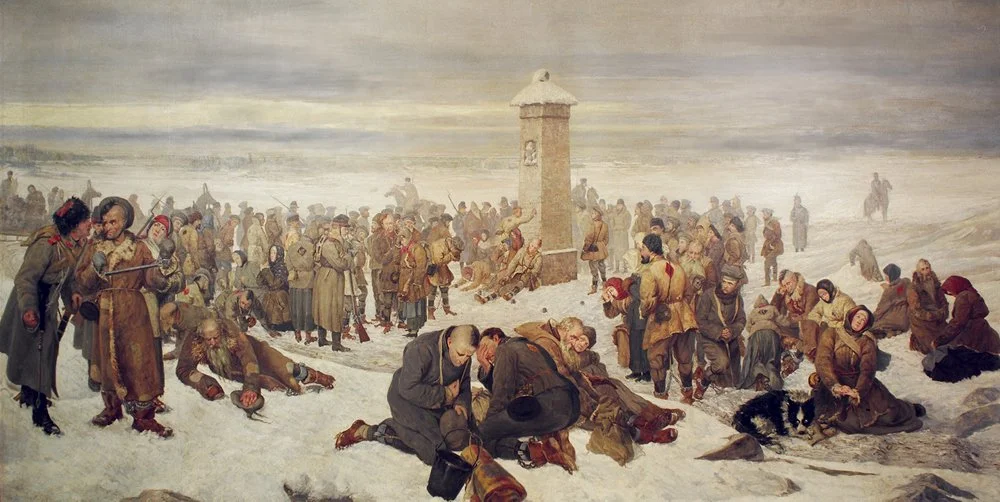
Farewell Europe!, Aleksander Sochaczewski, 1894.
Exile
Upon their arrival in Siberia, the women encountered more challenges. First, they were informed that they would only be allowed to speak with their husbands in Russian (French was the preferred language among the aristocracy; many had shaky Russian) and only in the presence of an officer. Moreover, they were not permitted to live with their husbands, who were confined to the prisons.
Maria and Yekaterina rented a small cabin together in a mining settlement. Maria described it as so narrow that “when I lay down on my mattress on the floor my head touched the wall and my feet were squashed against the door.”
Officials were aware that the arrival of the wives put them in a precarious condition. As Beer describes, “Officials could not restrict the men’s access to their wives without at the same time publicly punishing selfless and devoted women who had already suffered a great deal.” It was a balancing act between their loyalty to the state and respect and admiration for the wives.
A result of this dilemma was that the women had a privileged position of negotiation. One Decembrist recalled the women entering into verbal combat with officers:
“They would say to his face the harshest and most acerbic words, calling him a jailer and adding that no decent man would have assumed his position unless it was, whatever the consequences and the tsar’s fury, to alleviate our lot.”
In August of 1830, in the midst of their adjustment to Siberia, the Decembrists were yanked away from Chita, their prison home for the past 2 years, and ordered to prison in Petrovsk Zavod. It was a 670-kilometer journey.
The women learned of the impending move in June of 1830. At the time, all of them were nursing infants, an added burden to the trek. Moreover, they were told that they would be forced to choose between living with their husbands in the prison — essentially making them prisoners too — or living outside the prison and visiting their husbands only twice a week.
Yekaterina wrote to the head of the Third Department (Nicholas’ secret police force) begging an intervention with the Tsar:
“General, I have given up everything so as to only not be parted from my husband. I live only for him. For God’s sake, do not take away the possibility of being with him.”
Nicholas denied the request.
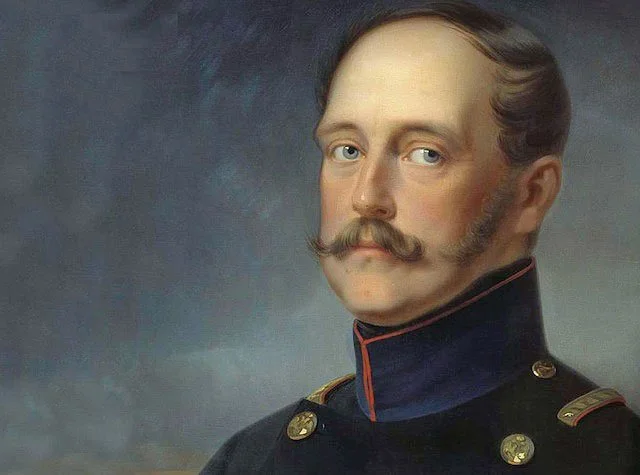
Nicholas I.
Arriving in Petrovsk Zavod, the women rented cabins on the outskirts of the prison. In order to visit their husbands, they were forced to walk between their homes and the prison in temperatures below -20 degrees Celsius. They had to leave their children at home, once again forced to choose between husband and child.
Aleksandra wrote to her father of the agony of such decisions:
“My heart bleeds for my child, who is left alone at home. On the other hand, I’m terribly worried about Nikita … It has already been two days since I have seen him, because I am seriously ill and cannot leave home.”
This letter was, in fact, confiscated, as it suggested poor living conditions that could stir unrest back home. Such “reckless love,” as one official called it, need not inspire others to similar misfortunes.
Their worries reached a critical point when Aleksandra died in September, 1832. Frantic officials worried that the news would provoke public uproar, and as a result, issued a new allowance for husbands to visit their wives outside of the prison.
Finding Freedom in Siberia
The wives’ support extended beyond the prison walls. They formed what one commentator called “a link between the living and the politically dead.” Each woman acted as a scribe and postman for a number of men in the prison, writing letters to families and friends in Russia.
The wives, unlike the prisoners, were able to send relatively free correspondence. By doing this, they could circulate news of the Decembrists to influential circles in Russia. As a result, Beer notes,
“The tsar found himself very publicly playing the part of a petty and vindictive tyrant, gratuitously separating children from their parents and inflicting suffering on women who were not only innocent but also embodied the very highest virtues of spousal devotion and self-sacrifice.”
The women also became active members of their Siberian communities, fostering learning and charity among the poor. The Decembrist community as a whole spread knowledge throughout Siberia, attempting to bypass the time by engaging in studies of geography, anatomy, literature, and languages.
Eventually, a few of the wealthier Decembrists were able to build homes after being released from penal labor to settlement status in 1835. However, most of the families continued to struggle in Siberia, unable to earn a living and forced to farm a landscape that was both unfamiliar and hostile.
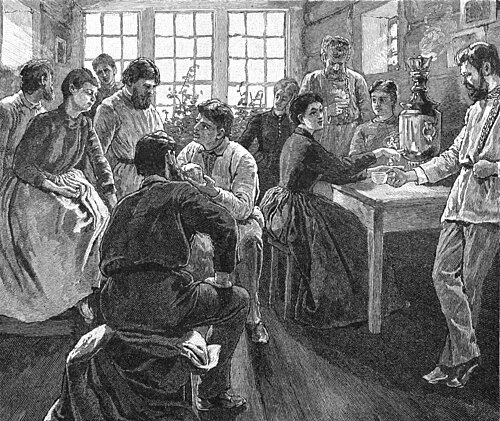
A meeting of political exiles. From George Kennan’s book, Siberia and the Exile System.
Remembrance
Their struggles made the Decembrists immortal. In the words of one Decembrist, they became “political martyrs for our ideas.” In the decades to follow, the Decembrists would serve as inspiration for many liberal and radical elements of Russian society who saw in their actions an answer to autocratic tyranny.
However, it was the women who captured the imagination of the Russian people. They lost as much, if not more, as their revolutionary husbands. While they did not participate in any crimes against the state, they accepted their treatment as criminals, despite their innocence, for the sake of love and devotion.
Their actions inspired writers and thinkers throughout the 19th century. Poet Pyotr Vyazemsky declared,
“We must thank these women! They have added a few beautiful lines of verse to our history.”
Nikolai Nekrasov’s poem “Russian Women” was inspired by them, along with Dostoevsky’s ending of Crime and Punishment.
Dostoevsky’s entire philosophy, in fact, was formed by his time in Siberia. His first clear formulation of his new faith can be found in a letter written to one of the Decembrist wives, Natalia Fonvizina, in 1854. He was profoundly impacted by what he saw as “the voluntary nature of their suffering.”
*
In January, 1850, Dostoevsky reached Tobolsk on his way to exile in Siberia. While waiting, he was unexpectedly welcomed by three of the Decembrists’ wives. It was a profound experience.
He described these “great martyresses” who sacrificed everything, “their social position, wealth, connections, relatives, and sacrificed it all for the supreme moral duty, the freest duty that can ever exist.”
For the next four years of his exile, Dostoevsky slept with a copy of the Gospels, gifted to him by the Decembrist wives, under his pillow.
Theirs is a story of endurance, integrity, and sacrifice. It inspired generations of thinkers, writers, reformers and revolutionaries in Russia.
“I have forgotten my native city,
Wealth, honors and family name
To share with him Siberia’s cold
And endure the inconstancy of fate.”
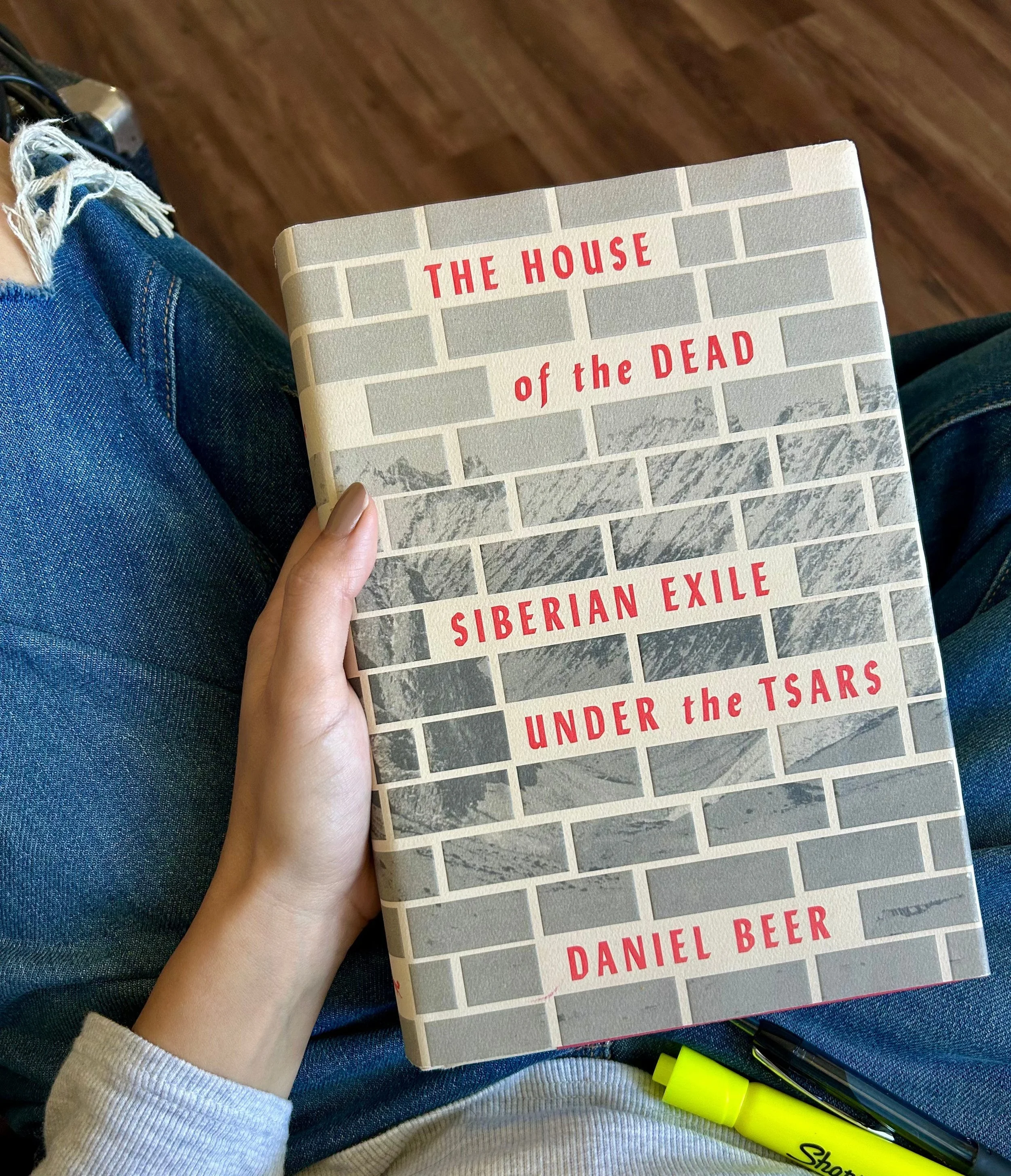
This essay was inspired by my reading of The House of the Dead: Siberian Exile Under the Tsars
For further writing, please visit my substack: A Country of the Mind
Bibliography:
Daniel Beer, The House of the Dead: Siberian Exile Under the Tsars, 2017.
Orlando Figes, Natasha’s Dance, 2002.